Structural crawl space sanitation addresses subterranean contamination underneath residential pier-and-beam foundations and raised foundations throughout Los Angeles County. In older architectural footprints across…
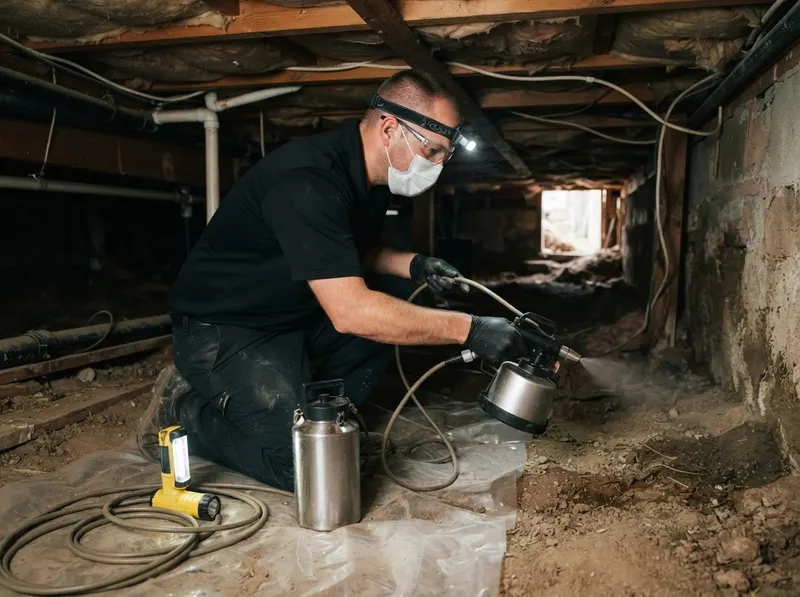
Structural crawl space sanitation addresses subterranean contamination underneath residential pier-and-beam foundations and raised foundations throughout Los Angeles County. In older architectural footprints across Silver Lake, Echo Park, and Highland Park, raised foundations frequently face breaches from Rattus norvegicus (Norway rats) and Rattus rattus (roof rats). These rodents leave droppings, pheromone trails, and urine deposits directly on subfloor joists and subgrade earth. Unchecked contamination generates aerosolized pathogens, including Hantavirus pulmonary syndrome and Leptospira bacteria, which migrate into upper living areas via the thermal stack effect through wire penetrations and floor registers. Technicians apply EPA-registered botanical virucides and broad-spectrum bactericides to structural timbers, deactivating airborne pathogens before subfloor insulation undergoes extraction.
Contamination dynamics shift significantly depending on local geography and foundation style. Coastal communities such as Venice and Pacific Palisades exhibit persistent oceanic marine layers that mix with crawl space moisture, promoting fungal spore amplification and wet-waste decomposition beneath living areas. Conversely, valley properties in Sherman Oaks encounter acute dry heat cycles that turn pest waste into brittle, powdery particulate matter that easily drafts upward into central HVAC returns. Structural crawl space sanitation establishes clear trade-offs between localized surface sterilization and full restorative extraction: surface antimicrobial spraying addresses mild perimeter activity, whereas complete remediation requires stripping compromised R-19 or R-30 batt insulation, extracting saturated soil, and installing a continuous 6-mil to 10-mil polyethylene vapor barrier across the exposed earth.
Execution follows an objective, sequenced methodology to protect indoor air quality during active sanitization. 1. Technicians seal all interior foundation vents, subfloor chases, and access hatches from the home interior to maintain negative pressure boundaries. 2. Heavy mechanical vacuuming utilizing continuous HEPA-filtration captures rodent feces, decayed nesting mass, and soiled thermal materials without releasing particulate into outdoor living zones. 3. Technicians spray hospital-grade, low-toxicity enzyme formulations on damp framing to digest pheromone trails and neutralize biological bacteria colonies. 4. Critical entry voids, sill plate junctions, and foundation air vents receive galvanized 1/4-inch steel hardware cloth exclusions. Properties along hillside zones in Los Feliz, Brentwood, and Koreatown frequently require foundation crack sealing with elastomeric masonry compounds to lock out future rodent access while maintaining subfloor ventilation baselines.
Every job gets a firm, written price after a free on-site visit.
Tell us about your structural crawl space sanitation and sanitizing job in Los Angeles and we'll send a clear, written quote, usually the same day.
 Windmill Pest Control