Exterior mosquito barrier reduction controls biting populations by targeting the specific microclimates where invasive Aedes and native Culex mosquitoes shelter between blood meals. In urban Los Angeles, daytime-biting…
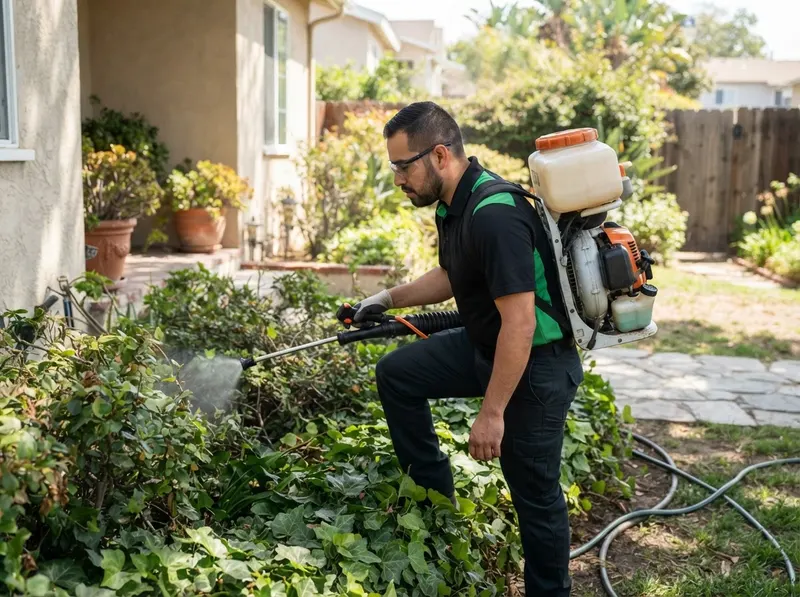
Exterior mosquito barrier reduction controls biting populations by targeting the specific microclimates where invasive Aedes and native Culex mosquitoes shelter between blood meals. In urban Los Angeles, daytime-biting Aedes albopictus and Aedes aegypti breed in unemptied plant saucers, drain channels, and dense groundcover rather than large open waterways. Foliar treatments coat the undersides of broadleaf foliage, ivy, and shaded structural perimeters up to a 10-foot ceiling where adult mosquitoes harbor during peak heat. Biological larvicides utilizing Bacillus thuringiensis israelensis (Bti) granules are placed into non-potable collected water like French drains and fountain basins to halt reproductive cycles without harming non-target organisms.
Decision-fit depends on lot topography and landscaping density. Dense coastal yards in Venice or hillside canopies in Los Feliz require targeted barrier misting because prevailing humidity keeps foliage damp, sustaining adult rest zones. Open, hardscaped patio parcels in Koreatown or Boyle Heights generally need drainage channel correction and container mitigation rather than extensive foliar sprays. The operational trade-off is treatment durability versus environmental impact: contact barrier mists provide immediate population knockdowns lasting 21 to 30 days, but heavy irrigation cycles or continuous marine fog shorten active residue lifespans, requiring timed interval reapplications during peak activity months between May and October.
Properties bordering natural chaparral and canyon corridors present distinct vector challenges. Homes near Griffith Park, Elysian Park, or the Sepulveda Basin encounter higher ambient insect pressure from riparian zones, making perimeter foliage interception essential. In elevated microclimates like Brentwood, Pacific Palisades, and Highland Park, properties often feature terraced retaining walls where moisture collects out of reach of standard lawn care. A structured barrier protocol treats these vertical zones sequentially: first by inspecting low-lying hardscape seams, second by deploying water-soluble larvicide in persistent damp spots, and third by applying botanical- or synthetic-pyrethroid barriers to surrounding vegetation, leaving open turf and edible vegetable beds untreated.
Every job gets a firm, written price after a free on-site visit.
Tell us about your exterior mosquito barrier reduction job in Los Angeles and we'll send a clear, written quote, usually the same day.
 Windmill Pest Control