Thermal remediation operates by elevating the interior ambient air of a residence to 120°F to 135°F using specialized industrial electric or indirect-fired heaters paired with high-velocity air movers. At sustained…
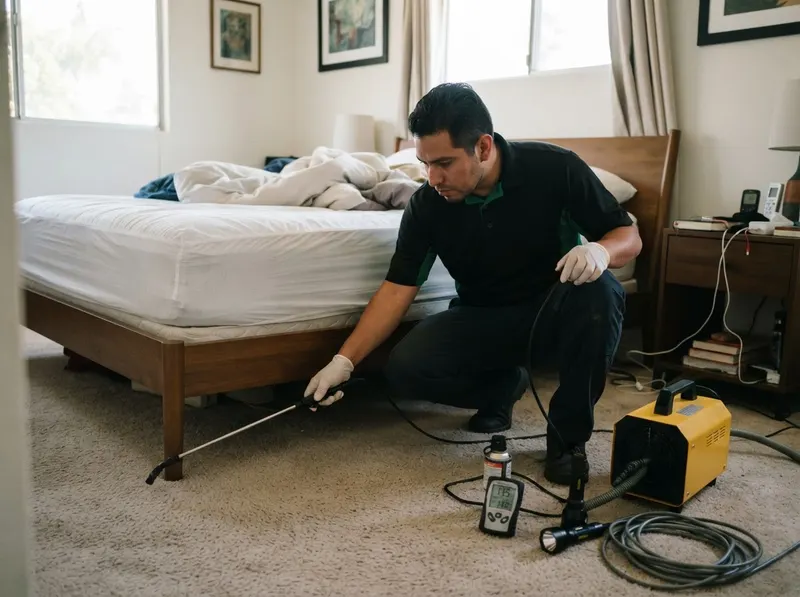
Thermal remediation operates by elevating the interior ambient air of a residence to 120°F to 135°F using specialized industrial electric or indirect-fired heaters paired with high-velocity air movers. At sustained temperatures exceeding 122°F, bed bug cellular proteins coagulate, ensuring complete mortality across all development phases, including microscopic eggs that standard contact insecticides fail to penetrate. In high-density rental buildings in Koreatown and Boyle Heights, thermal remediation eliminates the risk of pesticide-induced scattering, which frequently drives pests through shared plumbing chases and drywall partitions into adjacent units. Once the thermal cycle finishes, technicians introduce a targeted EPA-registered desiccant dust, such as amorphous silica gel, inside electrical outlets, structural baseboards, and subfloor junctures to create a long-term physical barrier against reintroduction.
Selecting whole-structure thermal remediation over localized chemical-only applications depends on interior clutter density, structural access, and infestation duration. A homeowner in a 1920s craftsman in Echo Park or Silver Lake facing structural gaps and tongue-and-groove flooring benefits from heat convection because air permeates concealed cavities without requiring invasive wall drilling. Conversely, localized residual applications suit isolated single-room detections or strict heat-sensitive settings. The primary operational trade-off involves preparation rigor: heat protocols require the removal of pressurized cans, candles, wax items, medications, oil paintings, and vinyl blinds prior to heating. While chemical residual treatments leave possessions in place, they require two to three follow-up visits spaced 14 days apart to address newly hatched nymphs, whereas heat achieves biological clearance in a single 6- to 8-hour window.
Building architecture and thermal mass across Los Angeles dictate equipment configurations. Historic apartment complexes near Elysian Park with older 60-amp electrical panels require specialized trailer-mounted hybrid generator systems parked street-side, whereas detached residences in Sherman Oaks, Brentwood, and Pacific Palisades utilize direct-feed portable arrays. Heat distribution is monitored continuously through wireless thermal sensors placed inside mattress cores, deep sofa cushions, and exterior wall voids to verify that cool spots do not compromise treatment thresholds. Occupants, pets, and indoor house plants must remain off-site during the thermal phase and can safely return once interior temperatures drop below 85°F, typically 2 to 4 hours after system shutdown.
Every job gets a firm, written price after a free on-site visit.
Tell us about your bed bug heat and residual treatments job in Los Angeles and we'll send a clear, written quote, usually the same day.
 Windmill Pest Control